69% of B2B Buyers Switch Vendors After AI Chatbot Research: The Pipeline Shift You Cannot Ignore (June 2026)
New research released in Q2 2026 confirmed what many B2B revenue leaders already suspected: AI chatbots are now the first stop in enterprise buying journeys, and they are actively reshaping which vendors get shortlisted. According to data from Omnibound, 51% of B2B software buyers now begin their research in an AI chatbot rather than Google. More striking: 69% of those buyers chose a different vendor than they originally planned, based on what the AI told them.
This is not a gradual shift. Eleven months ago, the AI-first research figure stood at 29%. B2B teams who have not updated their content strategy for generative engine visibility are already losing deals they never knew they were in.
Why Does AI Chatbot Research Change the Vendor Decision?
AI chatbots do not return ten blue links. They synthesize a recommended answer, cite two or three sources, and give the buyer a conclusion. If your brand appears in that synthesis, you gain credibility before any human conversation takes place. If you are absent, you are not in the running.
The buyers who end up switching vendors are not being disloyal. They are following a confident AI recommendation. This is the new first impression, and most B2B brands are not managing it.
I sold technology to trucking companies early in my career. The most practical buyers on earth. If the value was not obvious in one sentence, the conversation was over. AI responses work the same way. The model forms a conclusion fast. Your brand is either in it or it is not.
The practical consequence: every piece of content your team publishes needs to be written as a self-contained, citation-worthy answer block that AI models can extract, quote, and attribute to your brand.
What Channels Are Losing Ground?
Traditional SEO-driven content, form-gated whitepapers, and keyword-stuffed blog posts are the main casualties.
- 96% of B2B companies are invisible in early-stage AI discovery queries (2X survey, 2026)
- Only 4.3% of companies appear in AI responses to broad category-level questions
- Brands cited in AI Overviews earn 35% more organic clicks than non-cited competitors on the same queries
The companies in that 4.3% are not lucky. They are publishing shorter, structured, fact-dense content that AI models cite with confidence.
What This Means for Your Pipeline Strategy
A buyer who researches "best [category] vendor for [use case]" in ChatGPT, Claude, or Google AI Mode and gets a confident recommendation will not shortlist seven companies. They will shortlist two or three and start the evaluation there.
This makes top-of-funnel AI visibility a revenue problem, not just a marketing problem.
The deeper issue is foundation. AI visibility is just one layer. If a buyer finds your brand in an AI response, clicks through, and lands on a website with a weak message and no clear proof, the lead evaporates. I rebuilt my own positioning after my agency went from 20 clients to zero. The diagnosis was the same problem in reverse: I was visible, but the story underneath was broken. AI amplifies whatever exists, including the broken parts. Fix the foundation first.
From my own work with security and GRC companies, the event-led approach closes the gap between AI discovery and real pipeline. One AI-regulation webinar I ran pulled 754 signups in 26 days, over 100 from target accounts, zero ad spend, and generated $180K in pipeline. The reason it worked was topic selection: a subject buyers already wanted to discuss, with a voice they already trusted. When your brand appears in an AI response on that same topic, the webinar invite that follows lands with context already established.
How to Get Your Brand Cited in AI Research
Write structured proof blocks. Each article section should answer one question in 130 to 170 words, lead with a cited stat, and close with a clear takeaway. This is the format AI models extract from.
Publish verified statistics. AI models cite content with specific, verifiable numbers. Vague claims get ignored. Precise claims get quoted.
Cover the full buyer question set. Map every question your ICP asks during evaluation, comparison, and implementation. Publish a clear, authoritative answer to each one.
Host live events around your content themes. Across hundreds of campaigns I have tracked, event invites get accepted 40 to 50 percent of the time. Pitch outreach gets 5 to 10. Same lists, same senders. The ask is the only variable. Buyers who already saw your brand in an AI response and then receive a relevant event invitation convert at a rate cold outreach cannot touch.
The window to build this authority before competitors do is narrow. The 69% vendor-switch figure will climb as AI-first research becomes the universal default.
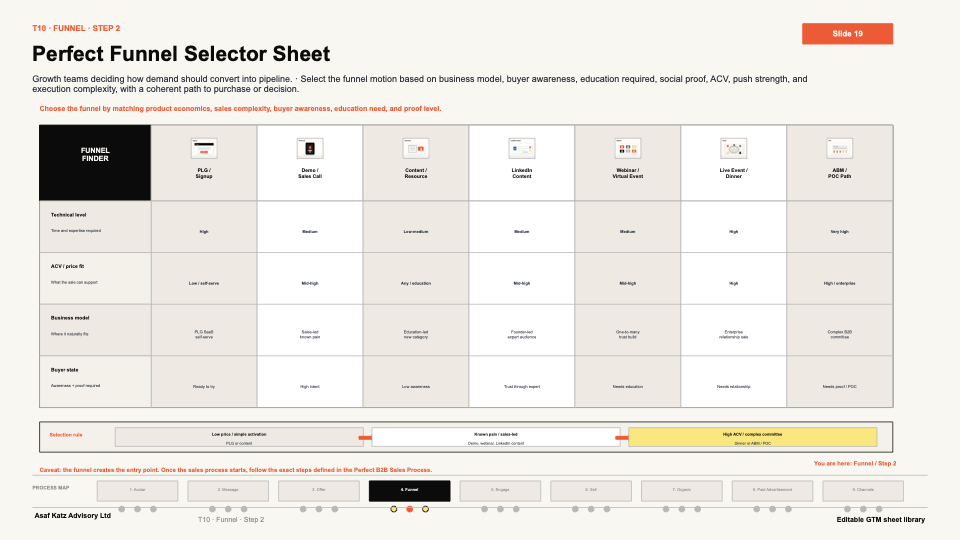
Use this to pressure-test whether your current demand gen motion matches how your buyers actually research and decide. Most teams are still building for a search behavior that is already shrinking.