Demand Generation for Cybersecurity: The 2026 Event-Led Playbook
Demand generation for cybersecurity in 2026 works best when you stop cold pitching and start hosting events security buyers actually want to attend. The cybersecurity market is flooded with vendor outreach. Cold email, LinkedIn sequences, and conference badge scans are everywhere. Security buyers have developed sophisticated filters against all of it. The motion that consistently breaks through is the one that starts with something the buyer finds genuinely useful.
Why standard demand generation fails for cybersecurity vendors
Cybersecurity is one of the hardest B2B verticals for demand generation. Three characteristics of the buyer make traditional cold outbound particularly ineffective.
Security buyers are among the most heavily targeted in B2B. CISOs, security architects, and GRC leaders receive more vendor outreach than almost any other persona. Their inboxes, their LinkedIn messages, and their phone lines are saturated. The filters they have built are correspondingly strong. A cold message with a generic security pitch is sorted out within seconds.
Peer validation drives buying decisions. A 2024 Pulse CISO survey found that peer recommendations are the primary source of vendor information for security leaders. Analyst reports and practitioner events ranked second and third. Cold vendor outreach ranked last. Security buyers do not take meetings because a rep reached out. They take meetings because a trusted peer told them the vendor was worth talking to, or because the vendor demonstrated relevant expertise in a context the buyer respects.
Technical skepticism is a job requirement. Security leaders evaluate vendor claims against a rigorous internal framework. Capability assertions made in a cold pitch without supporting evidence or peer validation are treated as marketing noise. The bar for earning credibility in a cold context is very high.
I saw this firsthand working with Kovrr, a cyber risk quantification company. Before we rebuilt their enterprise story around the buyer's problem, their outreach was landing in silence. The message was technically accurate. The audience just did not see themselves in it. Once we reframed the narrative buyer-problem-first, they closed 9 enterprise deals in a single quarter. They needed 4 to hit their fundraising quota. The story was the variable, not the volume.
The implication is clear. Demand generation for cybersecurity vendors needs to operate through peer-credible channels: events, practitioner content, community participation, and peer referral. Cold outreach volume is the wrong lever for this audience.
What the event-led cybersecurity demand generation playbook looks like
The event-led motion for cybersecurity vendors runs in five steps.
Step 1: Listen to what security buyers are actually discussing. Scan LinkedIn posts from CISOs and security architects, session questions from RSA and Black Hat, community threads in security-specific forums, and the friction inside your lost deals. The event topic comes from what buyers are actively wrestling with, not from what your product team wants to promote.
Step 2: Host a live event on the exact topic. A focused 45-to-60-minute session where security leaders discuss a real challenge: zero trust implementation, cloud security posture management, identity governance at scale, incident response readiness, or whatever is live in your market this quarter. The session must be substantively useful without your product being the centerpiece. CISOs who detect a sales pitch inside a peer event disengage immediately and do not return.
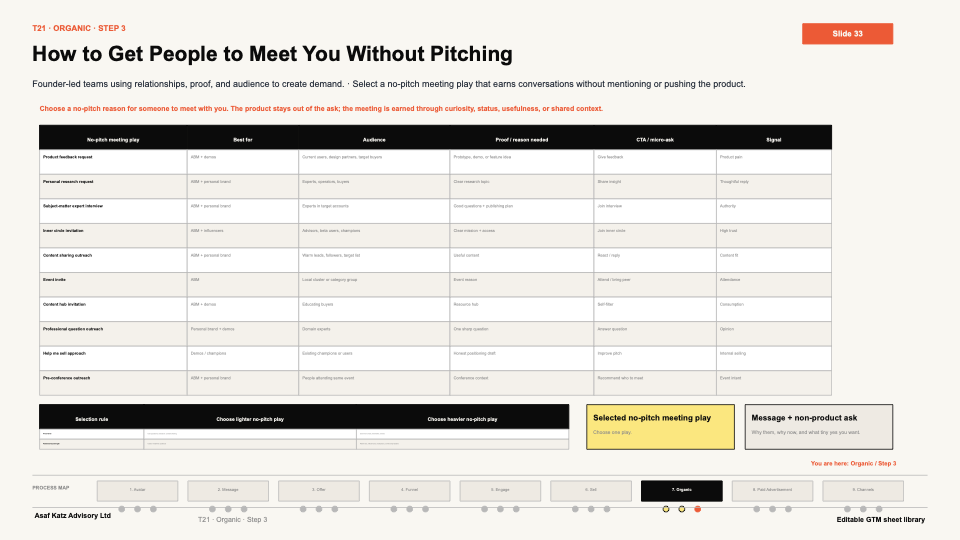
Step 3: Invite the right accounts with outreach that reads as a genuine invitation. Build the invite list around named accounts in your ICP. The invite message leads with the specific security topic and the peer panelists, not with your company or product. This matters more than most teams expect. Across hundreds of campaigns I have run, event invites get accepted 40 to 50 percent of the time. Pitch outreach to the same lists gets 5 to 10 percent. Same senders. Same contacts. The ask is the only variable.
Step 4: Run the event with genuine peer engagement. The host facilitates. The security practitioners lead the conversation. A session where CISOs and security architects discuss their real experiences creates the peer credibility that no vendor-led webinar can replicate.
Step 5: Follow up with the warmest attendees. After the event you know exactly who registered, who attended, who asked questions, and who stayed until the end. Those engagement signals identify the security leaders worth pursuing. Follow-up starts from a shared event context and a specific security challenge, not a cold introduction.
What results does this motion produce for cybersecurity vendors?
At RSA Conference, one person with no booth and no brand recognition booked 38 C-level meetings from 1,266 prospects. No cold pitches. The approach used 12-word openers, role-matched senders (technical founder to AppSec leads, CEO to CISOs), and led with connection before pitch. 519 connections accepted. 161 conversations opened. 38 meetings booked.
A broader event campaign in the security vertical drew 754 signups in 26 days, with more than 100 attendees from named target accounts, zero ad spend, and $180K in pipeline generated. The multiplier was topic selection: a subject buyers already wanted to discuss, with a voice they already trusted.
My own live show, Risk Takers, draws 460 to 577 live senior attendees per episode, built from zero. Recurring security-focused event series consistently produce 300 to 800 registrations per event when the topic is specific and the peer roster is credible.
A 60-day campaign using event-led outreach and structured follow-up produced 43 qualified meetings. These were meetings taken from a place of genuine buyer interest, not cold-call volume.
How to choose the right cybersecurity demand generation partner
When evaluating demand generation partners for your cybersecurity company, ask these questions.
Do they understand the difference between CISO, security architect, IAM lead, and GRC professional as buying personas? Each has different problems, different influence over the buying decision, and different channels through which they engage. An agency that treats your ICP as a monolith will underperform. I have seen this destroy campaigns that had everything else right.
Will they evaluate your offer before scaling outreach? Many cybersecurity vendors fail at demand generation not because of channel selection but because the offer is not sharp enough to earn a conversation. Scaling weak positioning produces more ignored messages at higher volume. Nobody earns the right to scale until the foundation is strong. That means a clear avatar, a sharp message, and an offer that makes the value obvious before the first follow-up.
What channels do they use, and why do those channels work with security buyers? If the answer is heavy cold email or LinkedIn automation at scale, expect the results that motion produces with a senior, skeptical audience. I sold into pharmaceutical companies for years. Long cycles, committees, compliance at every turn. Cybersecurity enterprise is similar. You sell into the process or you run out of time.
Can they show specific results in the cybersecurity vertical? Ask for actual metrics: meetings booked, live event attendance, pipeline generated. Vague case studies with testimonials but no numbers are a red flag.
Building demand generation that compounds over time
One cybersecurity event produces a warm attendee list. Two events grow that list and build repeat audience. Four events create a community of security leaders who associate your brand with peer conversations worth attending.
That community is a demand generation asset that cold outbound cannot create regardless of volume or frequency. It is also increasingly important in a market where security buyers make vendor shortlist decisions based primarily on peer input.
From my own work: I built Risk Takers from zero into a recurring live show with hundreds of senior attendees per episode. The initial audience came from the same targeted invite motion described above. The compounding came from consistency and topic quality. Each episode brought back previous attendees and added new ones because the conversation was worth attending, not because the promotion was aggressive.
A brand known for hosting useful security conversations holds a significant structural advantage over a brand known for high-volume cold outreach. The first builds trust by default. The second has to overcome distrust before the first real conversation can happen.
Take the free 60-second check to see if your offer is ready.