OpenAI shipped Dreaming V3 to ChatGPT Plus and Pro users in the US on June 4, 2026, with free-tier rollout following shortly after. It is not a new model. It is a new memory architecture that runs background synthesis after each conversation, updating a persistent user profile automatically. According to OpenAI, it is roughly 5x more compute-efficient than the prior system, which is what makes free-tier access viable.
For B2B buyers using ChatGPT as a research tool, this means the AI now remembers their role, company context, past vendor comparisons, and buying criteria across sessions. That changes the research dynamic in ways most B2B marketers have not planned for.
What Did OpenAI Actually Ship?
Dreaming V3 introduces what OpenAI calls "background synthesis." After a conversation ends, the system runs inference on that session and updates a persistent memory store. The prior system only captured explicit memories when a user said something like "remember this." The new architecture captures implicit context: the questions asked, the objections raised, the comparisons explored.
Starting with Plus and Pro users in the US, the rollout extends to free-tier accounts as well. The 5x compute efficiency gain is what enables this at scale. OpenAI positioned this as a core product feature, not a premium upsell.
Why B2B Revenue Teams Should Care
51% of B2B software buyers now start vendor research in an AI chatbot rather than Google, according to Demand Gen Report's 2026 State of B2B Marketing benchmarks. Dreaming V3 means those buyers now accumulate context across multiple research sessions. A CISO who asked ChatGPT about IAM vendors last week will receive responses this week that account for that prior context, including the objections they raised and the competitors they shortlisted.
I have watched this shift play out directly. When I rebuilt Kovrr's enterprise story, we made sure the narrative led with the buyer's problem, not the product feature. They closed 9 enterprise deals in one quarter. What that work forced us to do, and what Dreaming V3 now makes even more urgent, is answer the buyer's actual question before they finish asking it. An AI memory system rewards vendors who have already done that work. It punishes everyone who buried the answer in paragraph six.
The practical implication: your content needs to be answer-worthy inside AI chat, not just search-engine-optimized. Dreaming V3 rewards sources that appear consistently in AI-cited answers, because the AI will increasingly pull from the same trusted sources it has cited before within a user's memory history.
The GEO Implication for B2B Vendors
Generative Engine Optimization (GEO) is already a priority for B2B brands trying to appear in Google AI Overviews. Dreaming V3 adds a second vector: appearing consistently in ChatGPT research sessions. Teams that produce structured, answer-first content, such as FAQs, comparison guides, and how-to articles, are more likely to be cited repeatedly across a buyer's full research arc.
The practical move: audit your top landing pages for answer density. Does your pricing page answer "how much does this cost relative to hiring internally?" Does your case study page answer "what results should I expect in 60 days?" If not, a buyer's AI assistant will pull from whoever does.
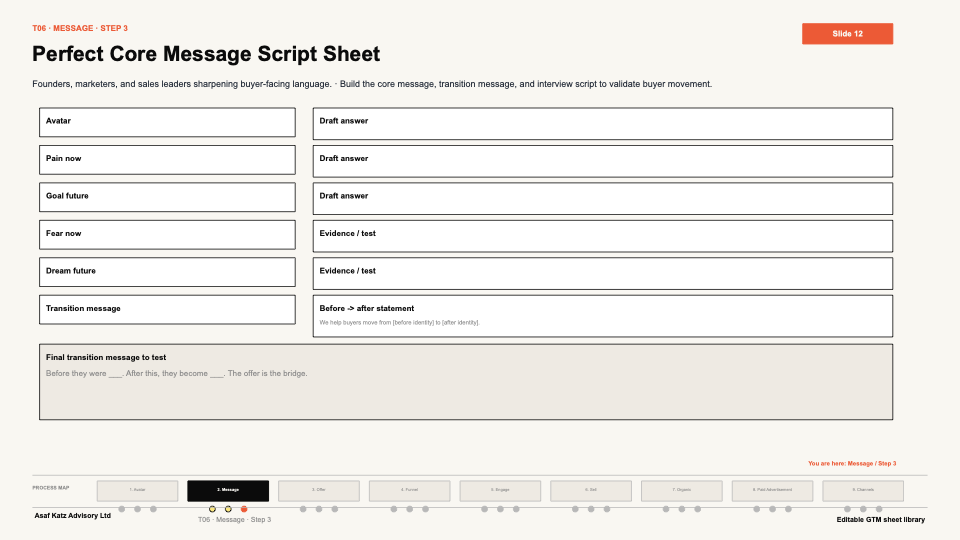
One more thing worth naming here. AI amplifies whatever exists, including the broken parts. If your messaging is vague, Dreaming V3 will memorize vague answers and surface them to buyers who deserved better. Fix the foundation before you optimize for AI citation. That sequence matters.
Event-Led Pipeline as a Memory-Proof Motion
The one demand generation motion that Dreaming V3 cannot disintermediate is a live event. When a prospect attends a webinar, hears your point of view, engages with your data, and asks questions in real time, that is a memory that exists in the buyer's mind, not just in a chat log.
I have run recurring event series that produced between 300 and 800 registrations per event. My own live show, Risk Takers, draws 460 to 577 live senior attendees per episode, built from zero. One AI-regulation webinar pulled 754 signups in 26 days, over 100 from target accounts, with zero ad spend, and generated $180K in pipeline. The reason it worked was not production value. It was topic selection: a subject buyers already wanted to discuss, with a voice they already trusted.
AI memory architectures will get better at summarizing vendor comparisons. They will not replace the intent signal of a buyer who chose to spend 45 minutes in your webinar.
What to Do This Quarter
- Rewrite your top five pages to lead with a direct 40-word answer to the most common question that page is meant to address.
- Add FAQ schema markup to every product and pricing page.
- Audit your entity presence across G2, Capterra, and trade publications. AI models cite entities that appear consistently across trusted sources.
- Fix your core message before you chase AI citation. A well-cited vague message is still a vague message.
- Double down on live events as the top-of-funnel motion that creates buyer-side memory no AI model can replicate.
The buyers are already researching you inside ChatGPT. The question is whether what comes back helps you or hurts you.