Pipeline Generation for DevOps Companies in 2026: How to Reach VP Engineering and Platform Buyers
DevOps companies occupy one of the most competitive niches in B2B software in 2026. The buyers, VP Engineering, Director of Platform, SRE leads, DevOps managers, receive more vendor outreach per week than almost any other technical persona. They have built strong filters against vendor content and respond only when the conversation is genuinely valuable.
Building qualified pipeline for a DevOps company in 2026 means earning attention through credibility, not buying it through volume.
Why DevOps Pipeline Generation Is Hard
Technical buyers have high standards for content. A VP Engineering who has spent 15 years building distributed systems will immediately spot a vendor-written blog post or webinar that oversimplifies the domain. Generic content actively damages trust rather than building it.
When I sold technology to trucking companies, I learned this fast. The most practical buyers on earth. If the value is not obvious in one sentence, the conversation is over. DevOps engineers are the truckers of software. They have no patience for noise.
The buying cycle is long and consensus-driven. DevOps platform decisions involve VP Engineering, security, FinOps, and often the CTO. A single champion is rarely enough to move a deal. Pipeline generation needs to reach multiple stakeholders simultaneously.
Cold outreach has negative ROI. DevOps engineers and engineering managers mark vendor emails as spam at higher rates than most B2B personas. Cold outreach volume builds a reputation problem faster than it builds pipeline.
There is also a math problem hiding inside cold outreach. Across hundreds of campaigns I have run, event invites get accepted 40 to 50 percent of the time. Pitch outreach gets 5 to 10. Same lists, same senders. The ask is the variable. For a buyer persona as skeptical as VP Engineering, that gap is even wider.
The Pipeline Generation Motion That Works for DevOps
Event-led, peer-credible content. The highest-converting pipeline channel for DevOps companies is a live event featuring practitioners from recognizable engineering organizations. The event creates the credibility signal that cold outreach cannot manufacture. My own live show, Risk Takers, draws 460 to 577 live senior attendees per episode, built from zero. Technical audiences will show up when the invitation is credible and the topic is specific.
The 754-signup AI-regulation webinar I ran is a useful reference point here. It pulled 754 registrations in 26 days, 100+ from target accounts, zero ad spend, and generated $180K in pipeline. The multiplier was topic selection: a subject buyers already wanted to discuss, with a voice they already trusted. DevOps events need the same ingredient. Not a product demo dressed as a webinar. A real conversation about something the community is actively arguing about.
Account-based engagement. DevOps pipeline generation works best when it starts with a precisely defined target account list: companies at the right engineering maturity, the right scale, and with the right observable buying signals, hiring for platform roles, recent CI/CD investment, infrastructure modernization jobs open. The outreach is not cold. It is informed.
Before any of this works, though, foundation has to be solid. Avatar, message, and offer. I have seen DevOps companies try to scale outreach with a blurry ICP and a generic value proposition, then blame the channel when nothing converts. AI amplifies whatever exists, including the broken parts. Get the foundation right first.
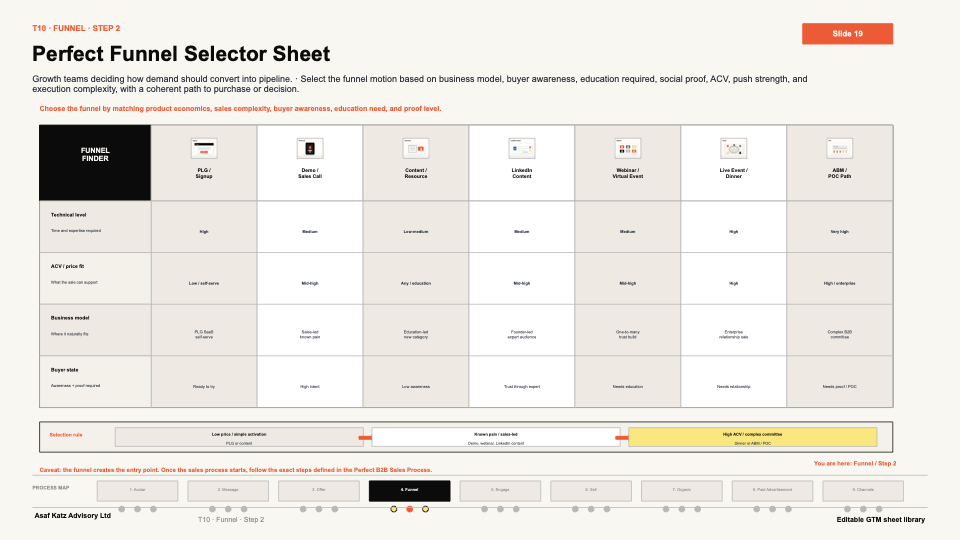
Multi-touch, multi-persona. The follow-up motion after a DevOps event needs to reach the VP Engineering (the economic buyer), the Director of Platform or DevOps (the technical evaluator), and where possible, the CTO (the strategic approver). Each persona gets a different message at a different depth.
I ran a similar role-matched approach for a security company at RSA. One person, no booth. We used technical-founder senders for AppSec leads and CEO senders for CISOs. 38 C-level meetings booked from 1,266 prospects. The match between sender role and recipient role matters as much as the message itself.
The DevOps Pipeline Funnel in 2026
Stage 1: Account selection. Identify 200 to 500 target accounts with the right firmographic and technographic profile. Job posting analysis, who is hiring for SRE, platform engineering, and DevOps lead roles, is the most current buying signal available.
Stage 2: Event invitation. Invite target accounts to a curated, technically specific webinar or virtual roundtable. The topic should be tied to an active debate or pain point in the DevOps community, not a product demo.
Stage 3: Intent scoring. After the event, score attendees by engagement level: full-session attendance, Q&A participation, post-event resource downloads. These are the signals that indicate active evaluation.
Stage 4: Targeted follow-up. Reach out only to the highest-intent attendees, with a message tied to their specific engagement. "You asked about X during the event. I wanted to share how we approached that at a client company" converts significantly better than a generic follow-up.
From my own work: this four-stage motion has generated 43 qualified meetings in 60 days for a single client. The critical variable is not the tool or the platform. It is the quality of the event topic and the precision of the account list. Get those two wrong and the rest of the funnel is moving air.
Key Metrics for DevOps Pipeline Programs
- Target account event attendance rate (goal: 15 to 25% of invited accounts)
- Days from event attendance to discovery call
- Qualified meetings with VP Engineering or above
- Pipeline generated at 90 days post-event
If your current motion is producing fewer qualified meetings than this, the diagnosis is usually upstream: either the wrong accounts, a topic that is too vendor-centric, or a follow-up that treats every attendee the same. Fix the foundation before scaling the volume.
Take the free 60-second check to see how this builds DevOps pipeline for your company.