Why the MQL Model Is Broken for SaaS in 2026
For the past decade, SaaS marketing teams have optimized for one metric: marketing-qualified leads. Volume of form fills, gated content downloads, demo requests, webinar registrations. The assumption was that more leads at the top of the funnel would produce more revenue at the bottom.
That assumption has broken down. SaaS markets are saturated. Buyers are more skeptical of inbound lead magnets. Content downloads do not indicate purchase intent. And MQL-to-revenue conversion rates have declined consistently as the volume of MQL-generating activity has increased.
The median SaaS pipeline coverage ratio sits at 3.2x quota in Q2 2026. Top-quartile teams are at 4.8x. Top-decile teams are at 6.1x. The gap is not explained by lead volume. The teams at 6.1x are not running bigger email lists or more aggressive ad campaigns. They have shifted from measuring lead counts to measuring pipeline quality: fit, intent, and conversion likelihood.
Pipeline Quality vs. Quantity: The Math That Matters
The quality-versus-quantity question has a simple answer at the unit economics level. A pipeline of 100 opportunities converting at 15% with an average deal size of $50,000 produces $750,000 in revenue. A pipeline of 300 opportunities converting at 5% with an average deal size of $30,000 produces $450,000, despite having three times as many opportunities.
Volume-focused pipeline programs miss this math because they optimize for the metric they can most easily influence, which is lead count, rather than the metric that actually matters, which is revenue.
I see this pattern constantly. My own agency went from 20 clients to zero when I was selling execution to teams whose real problem was foundation. The volume looked fine. The revenue did not. When I rebuilt the practice around judgment first, everything changed. Pipeline quantity without quality is not a pipeline. It is a workload.
ABM reverses the math in favor of quality. Targeting a defined set of high-fit accounts with coordinated, personalized engagement generates 2.6x more pipeline per marketing dollar, 41% higher win rates, and 33% larger deal sizes compared to broad demand generation. For SaaS companies with a clear ICP and defined target account list, ABM is the highest-ROI pipeline strategy available.
The quality pivot requires changing what you measure. Pipeline coverage by account quality tier, average deal size by acquisition channel, win rate by lead source, and time to close by first touch type. These are the metrics that reveal whether your pipeline program is producing revenue or just producing reports.
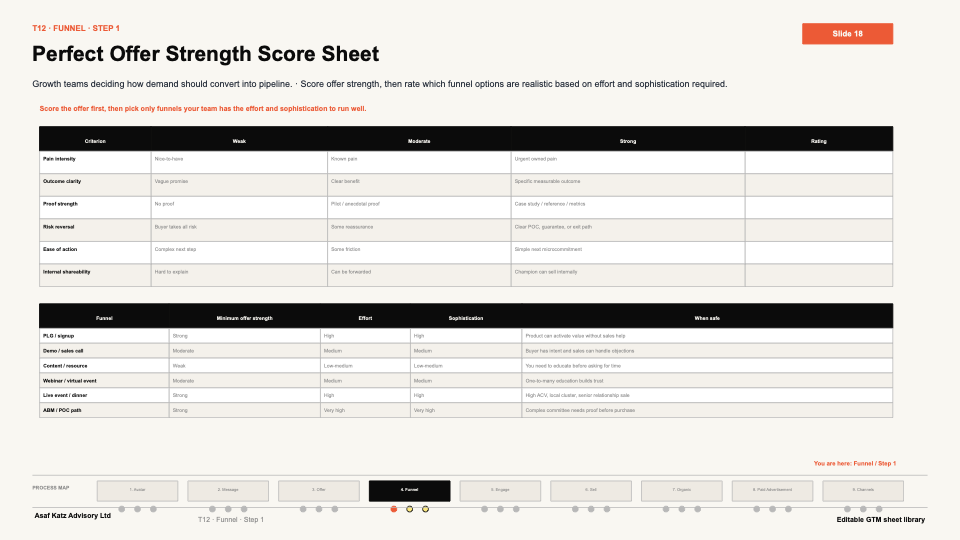
The Three-Part Modern SaaS Pipeline Engine
The SaaS teams generating top-quartile pipeline coverage in 2026 are running three coordinated motions simultaneously.
Signal-Based Outbound
Cold email reply rates average 3.43% for well-run programs. Signal-based outbound, targeting buyers who are already showing purchase intent, produces 15 to 25% reply rates. The difference is not the quality of the copywriting. It is the timing.
A buyer who is actively searching for solutions in your category, growing their team in relevant roles, or showing up at competitor events is already in motion. Reaching them at that moment with a relevant, personalized message is fundamentally different from reaching them cold on a Tuesday morning when they have no active need.
When I think about this, I think about the trucking companies I sold technology to early in my career. The most practical buyers on earth. If the value is not obvious in one sentence, the conversation is over. Signal-based outbound works for the same reason: you are arriving when the sentence already makes sense to them.
Building a signal-based outbound program requires intent data infrastructure, hiring triggers, and technology signals. The outreach is triggered by signal, not by a calendar-based sequence.
Event-Led Demand Generation
Events are the highest-trust entry point for SaaS pipeline. An attendee who spends 45 to 60 minutes at an event built around the problem your product solves has self-identified as someone who has that problem and is thinking about solving it.
That intent signal cannot be manufactured by outbound. It has to be earned. The event-led motion earns it by leading with education rather than sales. The attendee experiences your brand as a trusted resource before any commercial conversation happens.
One AI-regulation webinar I ran pulled 754 signups in 26 days, more than 100 from target accounts, zero paid ads, and generated $180,000 in pipeline. The multiplier was topic selection: a subject buyers already wanted to discuss, with a voice they already trusted. My own live show, Risk Takers, draws 460 to 577 live senior attendees per episode, built from zero. These numbers are not flukes. They come from a repeatable process.
Across hundreds of campaigns I have run, event invites get accepted 40 to 50 percent of the time. Pitch outreach on the same lists, with the same senders, gets 5 to 10 percent. The ask is the only variable.
The event-led approach is not a replacement for ABM or outbound. It is the anchor that makes both work better. Accounts that attended an event are warmer targets for ABM follow-up. Signal-based outbound sequences that reference a relevant upcoming event convert better than sequences that lead with a demo request.
Account-Based Marketing
ABM ties the signal-based outbound and event-led motions together at the account level. Rather than treating every lead as an individual, ABM tracks engagement across all stakeholders at a target account, building a multi-threaded relationship with the buying committee rather than a single contact.
For SaaS companies with deal sizes above $30,000 ARR, multi-threaded account relationships are not optional. They are the deal. Champions get overruled by economic buyers. Economic buyers defer to IT or Legal. Deals die in committee, not in individual conversations.
I sold into pharmaceutical companies for years. Committees, compliance, long cycles. You learn to sell into process or you die of old age. Enterprise SaaS is the same dynamic with shorter jargon.
ABM infrastructure maps who at each account has engaged, with what content, at what stage. It ensures that when one stakeholder goes cold, the relationship with the account continues through other threads. And it creates visibility into committee-level intent that single-contact CRM tracking completely misses.
How Events Anchor SaaS Pipeline
The specific mechanism by which events generate pipeline is worth understanding precisely, because it changes how you design, invite, and follow up on events.
Events generate pipeline through self-qualification. A buyer who attends a 45-minute session on the operational challenge your product addresses has told you something important: they have that challenge, they are thinking about solving it, and they are willing to invest time learning about solutions. That is a stronger signal than a demo request from someone who clicked an ad.
The follow-up converts the signal to pipeline. The warmest attendees, those who stayed longest, asked questions, engaged with resources, are the highest-intent buyers in the room. Personalized follow-up within 24 hours, referencing their specific engagement, converts at substantially higher rates than generic post-event emails.
The event is not the pipeline. The follow-up is. I have seen this play out with Vendict, whose webinar series grew so popular they turned it into a podcast. Thousands of leads last year. And with Kovrr, where rebuilding the enterprise story buyer-problem-first led to 9 enterprise deals in one quarter against a fundraising target of 4.
In both cases the event was not the close. It was the context that made the close possible.
Shifting From Volume to Quality: A Practical Roadmap
One rule I apply before anything else: nobody earns the right to scale until the foundation is strong. AI amplifies whatever exists, including the broken parts. If your ICP is vague, your message is generic, and your offer has no clear risk reversal, scaling the pipeline motion just produces more expensive noise. Fix the foundation first.
For SaaS CROs and VP of Sales ready to make the transition from volume-based to quality-based pipeline generation, the roadmap has five steps.
Step one: audit your current pipeline by lead source. Break down your existing pipeline by where the opportunity originated. What is the win rate by source? What is the average deal size by source? What is the time to close by source? This audit will almost certainly reveal that your highest-volume sources are not your highest-conversion sources.
Step two: define your ICP with account-level precision. Not just industry and company size, but the specific characteristics that predict a successful deal: technology stack, growth stage, team structure, regulatory context, buying committee composition. The more precise your ICP definition, the more targeted your pipeline programs can be.
Step three: build a target account list and commit to it. An ABM program requires committing resources to a defined set of accounts rather than broadcasting to everyone. Start with 100 to 200 accounts that match your ICP precisely. A focused account list with coordinated multi-channel engagement outperforms a large unfocused list every time.
Step four: anchor your pipeline motion to an event. Whether it is a hosted virtual roundtable, a conference activation strategy, or a webinar series, add an event-led motion to your program. The trust-building that happens in a live educational session cannot be replicated by digital channels alone.
Step five: measure pipeline coverage by quality tier, not total volume. Create quality tiers for your pipeline based on ICP fit, engagement level, and multi-stakeholder involvement. Track coverage within each tier against quota. This gives you a leading indicator of revenue performance that total pipeline volume cannot provide.
From My Own Work
The pattern I see most often in SaaS pipeline programs is this: the team is working hard, the volume looks reasonable, and the revenue is still disappointing. When I dig in, the problem is almost never effort. It is sequence. They are scaling before the foundation deserves it.
The highest-performing SaaS clients I work with do fewer things. They know exactly who they are for, they have a message that lands with that person, and they run one primary pipeline motion well before adding a second. The companies that struggle are running five motions badly.
43 qualified meetings in 60 days is a result I have produced for SaaS clients. Not leads. Qualified meetings with buyers who came in already trusting the host. That trust differential shows up in conversion rates at every subsequent stage. It is not magic. It is the compound effect of leading with education, following up on signal, and never asking for more than the buyer is ready to give.