Best ABM Agencies for Cybersecurity Companies in 2026
Cybersecurity is one of the hardest markets to run ABM in. Security buyers, and especially CISOs, are trained to ignore vendor marketing. They have seen every pitch. They distrust claims. They will not take a meeting based on a cold email or a banner ad. The agencies that win in this market understand that the path to a CISO is through peer education, event presence, and genuine technical credibility, not volume outreach.
ABM generates 2.6x more pipeline per marketing dollar than broad-reach demand gen, and for cybersecurity companies with long sales cycles and highly technical buyers, that efficiency gap is even more pronounced. The question is finding the right agency to execute it.
I have run ABM programs in this market. One person, no booth, no brand, booked 38 C-level meetings at RSA Conference from 1,266 prospects using 12-word openers and role-matched senders. That experience, and the work I have done helping 35-plus cybersecurity companies build their go-to-market, shapes everything I write here.
Why Cybersecurity ABM Needs Specialized Agencies
The buying process in cybersecurity is fundamentally different from most B2B categories. CISOs and security leaders are evaluated by their boards on the quality of their vendor decisions. A bad vendor selection is a career risk. That means they are skeptical of all vendor marketing by default, and they rely heavily on peer recommendations, analyst evaluations, and community consensus to make decisions.
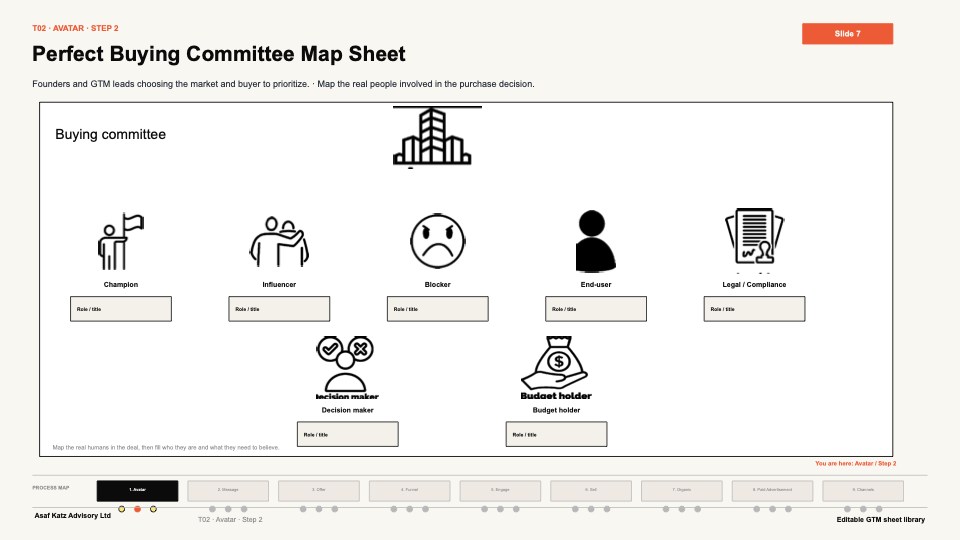
When I sold into pharmaceutical companies, I learned to sell into process or you die waiting. Cybersecurity has the same dynamic. The committees are real. The compliance constraints are real. Generic outreach dies in the first filter.
Agencies that succeed in cybersecurity ABM understand that CISOs want to learn before they buy. They do not respond to features-and-benefits messaging. They respond to peer roundtables where other security leaders are discussing a real threat. They respond to content that demonstrates deep knowledge of their compliance requirements. They respond to conversations that start with their problem, not your product.
The regulatory complexity layer adds additional difficulty. A healthcare CISO dealing with HIPAA has different priorities than a financial services CISO focused on SOC 2 and PCI DSS. Generic ABM campaigns that treat all security buyers as one segment fail because the specificity is missing.
Event presence is not optional in cybersecurity. RSA Conference, Black Hat USA, DEF CON, Infosecurity Europe, and the Gartner Security Summit are where security buying decisions are influenced. Agencies without relationships and experience at these events cannot execute a complete cybersecurity ABM program.
What to Look for in a Cybersecurity ABM Agency
The evaluation criteria that separate effective cybersecurity ABM agencies from generic ones:
CISO and security domain expertise. Can they write and speak credibly about threat landscapes, compliance frameworks, and security architecture? Credibility is table stakes in this market.
Event relationships and presence. Do they know how to activate at RSA and Black Hat, or just buy a booth? Buying a booth is not a strategy.
ABM execution capability. Do they have the tooling and process to coordinate multi-channel ABM across 150 to 300 target accounts?
Signal-based follow-up. Do they use intent data and engagement signals to prioritize outreach, or do they work from a static list?
The reporting distinction matters too. Agencies that report on leads and impressions are measuring the wrong things for ABM. The right agency reports on pipeline created in target accounts, meeting rates from event follow-up, and account progression rates across the target list.
Multi-channel execution is the norm for cybersecurity ABM. The winning combination is LinkedIn targeting for awareness, events for activation, and targeted email plus phone for the warmest accounts that engaged at events. Agencies that only do one channel cannot run a complete program.
One thing I tell every cybersecurity company before they evaluate agencies: nobody earns the right to scale until the Foundation is strong. That means a clear ICP, a message built around buyer pain, and an offer that makes the risk of saying yes lower than the risk of staying stuck. If those three things are not in place, no agency can fix it with execution volume.
Event-Led ABM for Cybersecurity: Why It Works
The insight is simple. Security buyers self-select when the topic is genuinely relevant to their situation. A buyer who attends your event is already warm when you follow up. A buyer who ignored your ad is cold no matter how many times you retarget them.
From my own work: one AI-regulation webinar pulled 754 signups in 26 days, more than 100 from target accounts, zero ad spend, and generated $180K in pipeline. The multiplier was topic selection. We chose a subject buyers already wanted to discuss, with a speaker they already trusted. The same logic applies directly to cybersecurity topics: active threat categories, new compliance mandates, board-level reporting requirements.
For in-person events, across hundreds of campaigns I have run, event invites get accepted 40 to 50 percent of the time. Pitch outreach to the same lists, with the same senders, gets 5 to 10 percent. The ask is the variable. Invite people to learn. Do not pitch them.
The event-led model for cybersecurity looks like this: identify what your CISO buyers are most worried about right now, build an event around that topic with a credible speaker who is not pitching your product, invite 150 to 300 target account contacts as guests, follow up with the most engaged within 48 hours. The RSA result of 38 C-level meetings came from exactly this approach: 519 connections accepted, 161 conversations opened, role-matched senders so technical founders reached AppSec leads and CEOs reached CISOs.
When evaluating any agency on event-led ABM, ask to see actual attendee-to-meeting conversion rates from security-specific events. Not impressions. Not registrations. Meetings in target accounts.
Established B2B ABM Agencies With Cybersecurity Experience
Beyond specialists, there are established B2B ABM agencies that have meaningful cybersecurity client experience and the infrastructure to run multi-channel programs. Agencies in this category typically bring strong ABM technology stacks, experienced account-based advertising teams, and structured SDR programs with security-specific messaging expertise.
The trade-off with established full-service agencies is cost and focus. These are typically larger programs with higher minimums, and cybersecurity is one vertical among many they serve. The advantage is that they bring proven ABM infrastructure that smaller specialists may not have.
When evaluating agencies in this category, ask specifically which security clients they have worked with, what the CISO engagement rates looked like from their events or campaigns, and how they measure account progression rather than lead volume.
Content-Driven Cybersecurity Marketing Agencies
A third agency type focuses on technical content and thought leadership as the ABM foundation. These agencies produce technically credible security content: threat research, compliance guides, incident response playbooks, and vulnerability analyses that establish the vendor as a genuine expert in the CISO community.
Content-driven agencies work best as an ABM complement rather than a standalone motion. Technical content builds the credibility that makes event invitations and outreach land better. CISOs who have read your threat research are far more likely to attend your event or take a call than those who have only seen your ads.
The risk with pure content agencies is that content without activation does not reliably produce pipeline. The content needs to be distributed to target accounts, tracked at the account level, and followed up when engagement signals fire. Agencies that do not combine content with account-level distribution and follow-up are producing brand awareness, not ABM.
PR and Analyst Relations Agencies With ABM Capability
For cybersecurity companies targeting enterprise accounts, analyst coverage and press presence can be ABM assets when used correctly. Agencies with strong relationships at Gartner, Forrester, IDC, and security-specific analysts can get clients into the research that CISOs consult when building vendor shortlists.
This is a longer-cycle ABM play. Analyst mentions and favorable press coverage warm up target accounts before direct outreach begins. The accounts on your target list that read a Gartner note mentioning you are more likely to respond to a direct invitation than cold accounts.
From My Own Work: What Breaks in Cybersecurity ABM
I rebuilt Kovrr's enterprise story buyer-problem-first. They closed 9 enterprise deals in one quarter. They had needed 4 to hit their fundraising quota. The change was not the channel. It was the message. They stopped leading with product features and started leading with the exact problem their security and risk buyers were already trying to solve.
I see the same failure pattern repeat across cybersecurity companies. The Foundation is broken: the ICP is too broad, the message is product-first, the offer asks for too much too soon. Then they hire an agency to scale the broken thing. AI amplifies whatever exists, including the broken parts. Get the Foundation right before you buy execution.
The other pattern I see: companies hire agencies and measure the wrong things. They celebrate MQLs while their target accounts never progress past awareness. The right metric for cybersecurity ABM is simple. How many qualified meetings did we generate in our target account list this quarter? Everything else is a proxy.
The Cybersecurity ABM Agency Evaluation Checklist
When evaluating any agency for cybersecurity ABM, use this checklist:
- Does the team demonstrate genuine CISO-level knowledge of current threats, compliance frameworks, and security architecture?
- Do they have documented experience running events or activations at RSA, Black Hat, or equivalent security events?
- Can they show account-level pipeline attribution, not just campaign-level lead reports?
- Do they use intent data and engagement signals to prioritize follow-up?
- Are they running multi-channel (LinkedIn, events, targeted email, phone) or single-channel?
- What is the minimum program size and how does it map to your target account count?
- Is your own Foundation (ICP, message, offer) strong enough to give the agency something worth scaling?
The single most important question is this: can they show you a case study where CISO-level contacts converted to qualified meetings from an event or targeted campaign? Any agency that cannot show this for cybersecurity specifically has not solved the hard problem in this market.
Take the free 60-second check