Why ABM Works Especially Well for Fintech
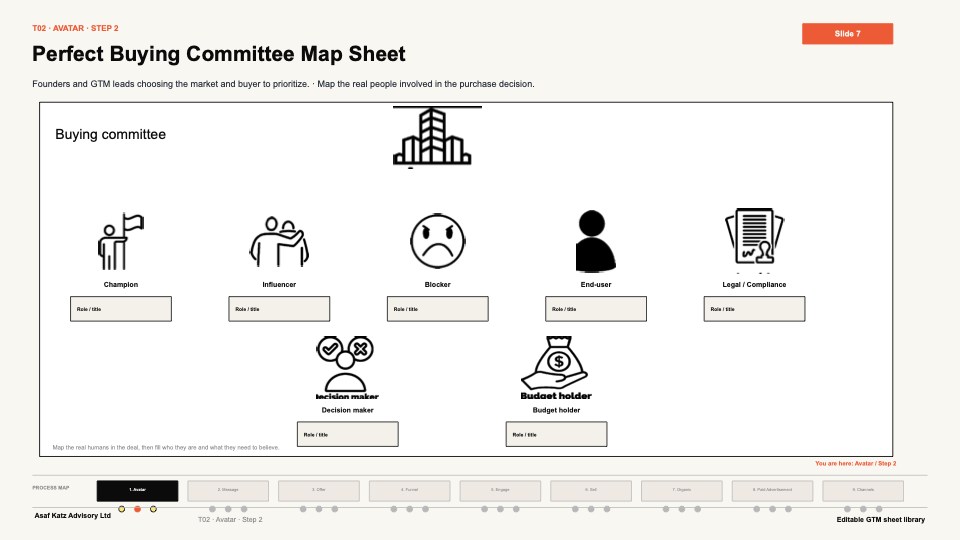
Fintech deals are rarely won by reaching a single buyer. A payment infrastructure sale might involve the CFO (economic buyer), head of payments (technical evaluator), compliance officer (risk gatekeeper), and IT security (technical reviewer). All of them need to be convinced. And they each need a different message.
ABM is designed for exactly this: coordinating touchpoints across a buying committee within a target account, rather than treating each contact as an independent lead. For fintech companies with enterprise deal sizes and six to twelve month sales cycles, ABM programs consistently outperform high-volume demand gen.
I've worked on both sides of this. When I sold into pharmaceutical companies, I learned what it means to sell into a committee-driven process with compliance gatekeepers at every door. Fintech is the same dynamic. You are not selling to a person. You are selling to a process. Learn to sell into that process or you will wait forever.
The best fintech ABM programs in 2026 layer signal monitoring, multi-stakeholder content, and live events together. Events are particularly powerful here because they bring multiple stakeholders from the same account into the same room, live or virtual, creating a shared context that accelerates deal progression.
What to Look for in an ABM Agency for Fintech
Prioritize three things. Demonstrated ability to map and engage multi-stakeholder buying committees in financial services. Content capability that addresses compliance, technical, and business perspectives at the same time. And verified pipeline outcomes at the account level, not just the contact level.
Skip ABM programs that are really just personalized cold email to named accounts. Genuine ABM requires account intelligence, coordinated multi-channel orchestration, and a long-view approach to relationship building. If an agency cannot show you account-level pipeline results, they are doing outbound with a fancier name.
Also: do not scale anything before the foundation is solid. That means a clear ICP, a buying committee map, and a message that actually speaks to each stakeholder's specific problem. AI tools and paid channels amplify whatever exists. If the foundation is broken, you amplify the broken parts.
The 5 Best ABM Agencies for Fintech in 2026
1. LinkedOtter
Best for: Fintech companies targeting enterprise financial services accounts with multi-stakeholder buying committees.
LinkedOtter's event-led pipeline program functions as high-intent ABM. Identify the highest-priority target accounts. Design a live event around the specific challenge their buying committee is navigating. Promote to verified decision-maker lists at those accounts. Follow up with the stakeholders who attended.
The event format is particularly powerful for fintech ABM because it brings multiple stakeholders from the same institution into the same session. When your CFO and compliance officer both attend a roundtable on open banking compliance, the post-event conversation is with a warmed committee, not a cold individual.
One example: a single AI-regulation webinar pulled 754 signups in 26 days, with 100-plus from target accounts, zero ad spend, and generated $180K in pipeline. The topic was something buyers already wanted to discuss. That is the difference between event ABM and event theater.
At RSA, one person with no booth and no brand booked 38 C-level meetings from 1,266 prospects using 12-word openers and role-matched outreach. These are account-level results, not contact-level vanity metrics.
Results: 43 qualified meetings in 60 days. 38 C-level attendees at RSA from 1,266 prospects. 754 webinar signups in 26 days with 100-plus from target accounts. Events from $6,000.
See how it works | View pricing
2. Belkins
Best for: Fintech companies running named-account outbound programs targeting specific financial institutions.
Belkins can execute account-targeted cold email programs focused on a defined list of fintech or financial services accounts. This is ABM lite. Not full committee orchestration, but a reasonable starting point for companies building their target account list and testing messaging. Use it to validate your ICP before investing in a full multi-channel program.
3. CIENCE
Best for: Fintech companies that want research-intensive account profiling combined with multi-channel outreach.
CIENCE's hybrid model suits fintech ABM well. The AI research layer builds detailed account profiles covering tech stack, recent compliance changes, leadership transitions, and funding activity. Human SDRs then execute the personalized outreach. For fintech companies with 50 to 200 high-priority target accounts, CIENCE's research depth is a genuine differentiator. The risk is that research without a strong message still produces cold outreach. Make sure your narrative is sharp before you hand it to any agency.
4. Martal Group
Best for: Fintech companies targeting North American enterprise financial institutions with a defined deal size and ICP.
Martal's enterprise network access is useful when getting to the right account contact is the primary bottleneck. Best suited for growth-stage fintech companies with an established product and a referral story from comparable institutions. If you cannot point to two or three wins in the space, the network access will not save a weak proof case.
5. EBQ
Best for: Fintech companies building ABM infrastructure from scratch without a full in-house team.
EBQ's shared-service model can stand up ABM functions fast: account research, content creation, outreach sequences, CRM management. For early-stage fintech companies proving out their ABM motion before building a dedicated team, EBQ provides the operational infrastructure. Think of it as renting the machine while you validate whether the motion works.
How to Make ABM Work for Fintech
Start with a tight target account list: 50 to 150 accounts where you have real conviction. Map the buying committee for each account type. Build content and event formats that speak to each stakeholder's specific concern. The compliance officer does not care about your ROI story. The CFO does not care about your API docs. They need separate messages, and both need to be right.
Layer in live events as the highest-intent touchpoint. When a target account's CFO and compliance officer both attend a relevant webinar, that is an account-level signal. It should immediately trigger your highest-priority follow-up, not a generic nurture sequence.
Across the programs I have run, event invites get accepted 40 to 50 percent of the time. Pitch outreach gets 5 to 10. Same lists, same senders. The ask is the variable. In fintech ABM, the event is not a nice-to-have. It is the mechanism.
Measure account penetration, not just lead counts. The right ABM KPIs: percentage of target accounts with active engagement, number of multi-stakeholder accounts with three or more touchpoints, pipeline value from your target account tier.