Cold emails get ignored in 2026 because they ask for attention before giving buyers a reason to care. Average reply rates across B2B cold email have fallen below 1% for most verticals (Woodpecker, 2025), and under 0.5% for C-suite personas. The problem is structural, not executional. Better subject lines and more personalization slow the decline. They do not reverse it.
Why does AI make cold email worse, not better?
AI lowered the cost of sending cold email to near zero. Every B2B vendor, agency, and consultant with a LinkedIn Sales Navigator account now runs automated sequences. The average senior buyer receives 40 to 80 unsolicited outbound touches per week (Forrester, 2025). Gmail, Outlook, and Apple Mail all upgraded AI filtering in 2026, routing more sequence emails to promotions or spam before a human ever sees them.
The more cold email floods inboxes, the better buyers get at deleting it. A VP of Engineering, CISO, or CFO has seen every personalization tactic, every "I noticed you use Kubernetes" opener, every "quick question" subject line. The delete reflex is now automatic.
AI does not fix this. It amplifies it. When I work with early-stage companies who want to scale outbound before they have a sharp message, I stop them. AI running on a broken foundation produces broken output faster. The diagnosis has to come first.
Why does personalization not fix the cold email problem?
Most cold email personalization is surface-level. Tools like Apollo or Clay inject a contact's job title, recent funding round, or tech stack into a template. But personalization that references observable facts is different from personalization that demonstrates genuine understanding of the buyer's current problem.
A CFO at a fintech company dealing with DORA compliance pressure does not care that you noticed their Series B. They care about whether you understand what is live and urgent for them right now. Unless your first two sentences demonstrate that understanding, the email reads like every other personalized template in their inbox.
I learned this selling technology to trucking companies years ago. The most practical buyers on earth. If the value is not obvious in one sentence, the conversation is over. That lesson transfers directly to cold email. You do not have a paragraph. You have a sentence.
What actually works instead of cold email in 2026?
The approaches that consistently reach senior buyers share one characteristic: they lead with something useful, not a request.
- Live events on relevant topics. An invitation to a 60-minute event on a problem the buyer is actively managing is a value offer. The buyer chooses to engage on their terms. One AI-regulation webinar I ran pulled 754 signups in 26 days, with 100+ from named target accounts, zero ad spend, and generated $180K in pipeline. The topic was something buyers already wanted to discuss, with a voice they already trusted.
- Signal-based outreach. Reach out after buyers show a buying signal: attending a competitor event, posting about your category, or joining a relevant community. Tools like Clay and Apollo surface these signals automatically. I tracked posts that target buyers' influencers wrote, harvested 1,175 engaged profiles from 45 posts, and opened 116 conversations at a 45.2% connection acceptance rate. Outreach tied to something they already cared about.
- Warm introductions. A referral from a trusted connection converts four to eight times better than cold email. Well-designed events create warm introductions organically because buyers from similar companies meet each other.
- LinkedIn thought leadership. Consistent posts from a credible founder or practitioner build passive awareness. When your event invitation arrives, the buyer already knows who you are.
The number that makes this concrete: across hundreds of campaigns I have run, event invites get accepted 40 to 50 percent of the time. Pitch outreach gets 5 to 10 percent. Same lists. Same senders. The ask is the only variable.
When does cold email still have a role?
Cold email is not dead for every use case. It still works for SMB targets at transaction volumes where quantity matters more than quality, deals under $20K ACV where a short email sequence is sufficient context, re-engaging former customers who already know your brand, and following up with event attendees who showed up but have not yet booked a meeting.
Cold email fails most badly for C-suite personas, enterprise deals above $100K ACV, and categories where dozens of competitors run identical sequences into the same inboxes. Cybersecurity is the clearest example. I booked 38 C-level meetings at RSA from 1,266 prospects using 12-word openers, role-matched senders, and a connect-before-pitch structure. No product pitch in the first touch. That is what it takes in a category where every vendor is emailing the same CISOs.
What should the first touch look like if not a cold pitch?
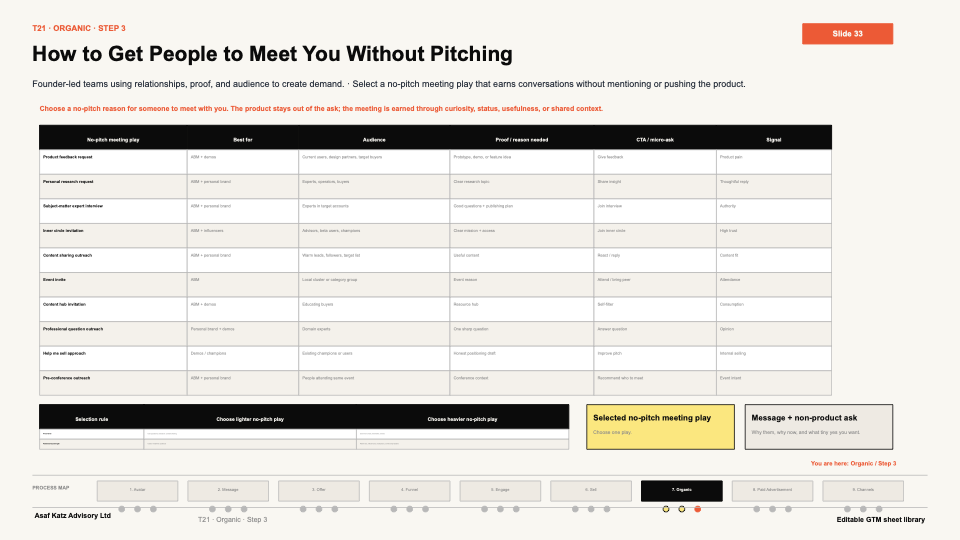
The first touch that works for senior buyers is an invitation, not a pitch. A short, clear message offering access to a live event on a specific topic the buyer is navigating right now. No product pitch. No "quick question." No "I'll be brief."
The event is the value. If the buyer shows up, you know the topic is live for them. Your follow-up is not cold because it is a continuation of a conversation they started. Using this exact approach, my clients consistently generate 8 to 14 qualified meetings per month per client, and one hit 43 qualified meetings in 60 days.
FAQ
Is cold email completely dead for B2B? No, but it is largely ineffective for senior buyers and enterprise deals. For SMB and transactional deals at low ACV it still has a role. For C-level targets in competitive categories, the ROI rarely justifies the investment.
What is the average cold email reply rate in 2026? The industry average is 0.5 to 2% for general B2B cold email (Woodpecker, 2025). For C-suite personas it falls below 0.5%. In high-volume categories like cybersecurity and MarTech, some verticals see under 0.2%.
What tool should I use to build a targeted event invite list? Apollo and LinkedIn Sales Navigator are the most common for building B2B lists by ICP filters. Clay enriches and scores contacts before outreach.
How much does event-led pipeline cost versus cold email? Cold email generates qualified meetings at $800 to $2,000 or more per meeting when you factor in SDR time, tools, and low conversion. Event-led pipeline, done well, can bring that cost down dramatically. Under $40 per meeting is achievable with the right list and the right invite.
Does LinkedIn outreach work better than cold email? LinkedIn InMail open rates are slightly higher but follow the same declining trend for senior personas. The same principle applies: lead with a value offer, not a pitch.
How do I know if my offer is ready for event-led pipeline? Take the free 60-second check to see if your ICP and offer are suited for the event-led motion.
Take the free 60-second check to see if your offer is ready.